Timmermans
New member
- Joined
- Nov 10, 2017
I have a 1992 volvo 240 manual with a B230FT motor and wasted spark setup. Lately the engine idles rough when warm, between 650 and 900 rpm. With the ac on, the engine sometimes almost stalls.
When accelerating hard the engine hiccups, holds back intermittedly, stutters, whatever you want to call it.
Sometimes I get a 121 AMM code. But I have read these don't have to be related directly to the amm...I have read these can also be produced when the mixture gets out of range
I don't know wether these 3 symptons are related and if they are mixture or ignition problems.
I have this setup for 6 years, but never had this problem. Where can I look next? Going on holiday in a week and want to have the issue fixed!
Google gemini suggest the following:
When accelerating hard the engine hiccups, holds back intermittedly, stutters, whatever you want to call it.
Sometimes I get a 121 AMM code. But I have read these don't have to be related directly to the amm...I have read these can also be produced when the mixture gets out of range
I don't know wether these 3 symptons are related and if they are mixture or ignition problems.
- What have I tested:
- AMM, values are good, also tested at the ecu, tested 2 AMM's https://ozvolvo.org/d/9733-bosch-lh-jetronic-24-ecu-and-ezk-pinout-tables
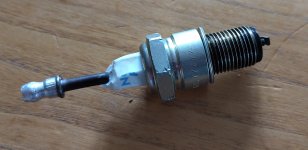
- Spark plugs and wires and coil are new
- Ingnition module doesn't get hot
- No air leaks, did a proper smoke test, (throttle body shaft leaked, fixed this)
- Fuel pressure regulator leaked a bit of pressure to the return line, had no residual pressure when shutting the car off. replaced this, no difference.
- TPS sensor works, adjusted the sensor and the throttle body after fixing the shaft seal
- Tested another ECU, no difference
- Coolant temp sensor values are good at the ECU
- ECU plug/pins pass the drag test
- Knock sensor values are good at idle, didn't test these with wide open throttle
- Injectors dont't leak at 3 bar fuel pressure
- Replaced the fuel filter
- Deatchwerk DW100 intank pump only, 2 years old, works well
- Lambda sensor tested at sensor and ECU, works well
- Intake hoses are silicone, no collapses.
I have this setup for 6 years, but never had this problem. Where can I look next? Going on holiday in a week and want to have the issue fixed!
Google gemini suggest the following:
1. AMM Wiring & Ground Shielding (Wasted Spark Interference)
You tested the AMM and the ECU pins, but did you test them while wiggling the harness?- Volvo 240 harnesses are notorious for internal wire degradation near the AMM connector.
- Furthermore, wasted spark coils output massive amounts of Electromagnetic Interference (EMI) compared to the stock distributor. If your AMM signal wire (which is shielded) has a degraded shield ground, or if the wasted spark wiring is routed too close to the AMM harness, the EMI can corrupt the 0-5V AMM signal under load. This will instantly trigger a 1-2-1 code and cause the ECU to miscalculate fueling, leading to a stall/stumble.
2. Spark Plug Gap and "Blowout" Voltage (The Stutter)
You mentioned the new plugs are gapped to 0.7mm. While 0.7mm worked great on your old, worn plugs, new plugs have sharp, crisp edges on the electrodes that actually change how the spark jumps under pressure.- Under heavy acceleration (Boost): High boost creates massive cylinder pressure, which dramatically increases the electrical resistance inside the combustion chamber. If the gap is too wide (0.7mm is right on the limit for a wasted spark B230FT), the energy required to jump that gap skyrockets.
- The Result: The coil has to work twice as hard to discharge. This causes spark blowout (the stutter). More importantly, because the coil has to build up a much higher voltage to jump that 0.7mm gap under boost, the Electromagnetic Interference (EMI) radiating off the plug wires increases exponentially. That sudden massive spike in wireless EMI is what is blinding your AMM wire 8 weeks after the change.
- The Fix: Regap the plugs down to 0.6mm (0.024"). This lowers the voltage threshold required to fire the plug, stops the blowout, and instantly reduces the amount of electrical noise radiating into your passenger-side engine bay.
Last edited: